
Elbow Disorders San Diego, CA
(858) 824-1703
San Diego, CA
Carlsbad, CA
Monday - Thursday | 7:30 am - 5:00 pm
Friday | 7:30 am - 2:00 pm
Specialties
Discover More Posts

The elbow is an important joint that allows us to bend, straighten, rotate, and position the arm for daily activities. From lifting objects and typing to playing sports, the elbow provides both stability and precision. Because it is used so frequently, the elbow is prone to injury and wear. Pain, stiffness, instability, or loss of motion can make it difficult to work, exercise, or even perform simple daily tasks.
James Andry, MD, a fellowship-trained and board-certified orthopedic surgeon in San Diego, specializes in the care of elbow disorders. He provides both non-surgical and surgical treatment, including minimally invasive arthroscopy and complex reconstructive procedures. His patient-centered approach focuses on restoring comfort, strength, and mobility.
Elbow Anatomy
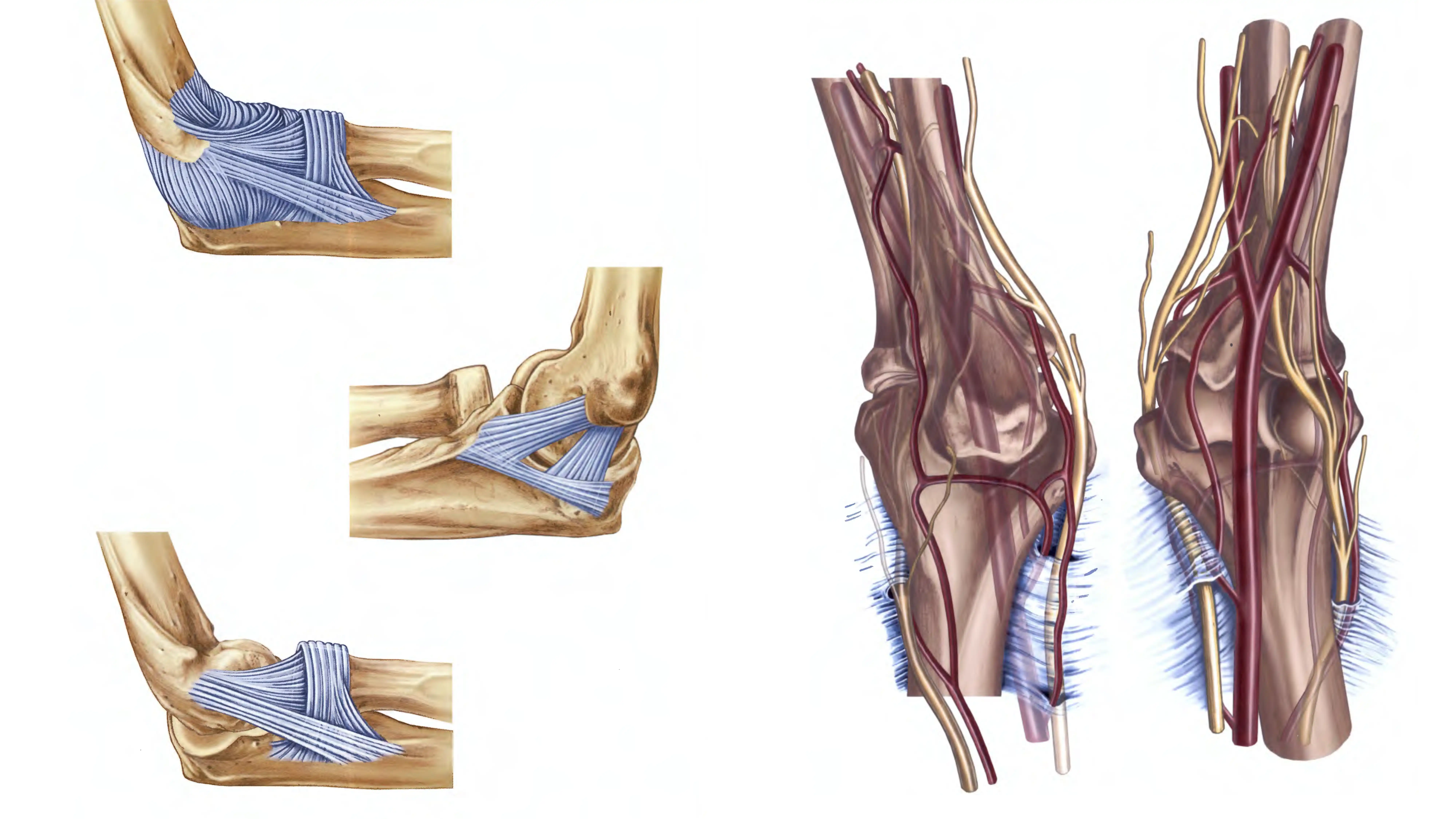
The elbow is a hinge joint that connects the upper arm bone (humerus) to the two bones of the forearm (radius and ulna). These bones form a structure that allows both bending and straightening, as well as rotation of the forearm. Strong ligaments surround the joint, keeping it stable during movement.
Muscles and tendons attach around the elbow to power motion. On the outer side, the extensor tendons control wrist and finger extension. On the inner side, the flexor tendons control gripping and wrist flexion. Nerves, including the ulnar nerve, pass through the elbow region and can contribute to pain or tingling when irritated. Cartilage lines the joint surfaces to allow smooth motion, while the joint capsule provides stability and fluid for lubrication.
Because the elbow combines both stability and mobility, it is vulnerable to overuse, trauma, and degenerative changes. Problems can arise in the bones, ligaments, tendons, or nerves, and many conditions overlap in their symptoms.
Common Elbow Disorders
Tennis Elbow (Lateral Epicondylitis)
Tennis elbow is one of the most common elbow conditions. It occurs when the tendons on the outside of the elbow become irritated or degenerate, often from repetitive wrist extension or gripping. Despite its name, it affects not only tennis players but also people who perform repetitive work such as typing, lifting, or using tools. Symptoms include pain on the outside of the elbow, weakness with gripping, and tenderness when pressing on the lateral epicondyle.
Treatment usually begins with rest, activity modification, anti-inflammatory medication, and therapy focused on stretching and strengthening the forearm muscles. Bracing may provide additional relief. Many cases improve without surgery, but when pain persists, surgical release or debridement of the damaged tendon can be performed. Recovery typically includes gradual return to activity under guided rehabilitation.
Golfer’s Elbow (Medial Epicondylitis)
Golfer’s elbow involves the tendons on the inside of the elbow that control wrist and finger flexion. Like tennis elbow, it is usually caused by repetitive stress, but it affects the opposite side of the joint. Symptoms include pain on the inner elbow, tenderness along the medial epicondyle, and weakness with gripping or wrist flexion. Activities such as throwing, lifting, or repetitive manual labor can worsen symptoms.
Initial treatment is conservative, involving rest, therapy, and medications. A brace or strap may help reduce stress on the affected tendons. If symptoms continue despite non-surgical care, surgery may be recommended to remove damaged tissue and restore tendon health. Recovery focuses on gradual strengthening and return to normal activities.
Elbow Arthritis
Elbow arthritis is less common than arthritis of larger joints like the hip or knee, but it can still cause significant pain and stiffness. It occurs when the smooth cartilage that covers the joint surfaces wears away, leading to bone-on-bone contact. Patients often notice pain with motion, swelling, grinding or locking sensations, and difficulty fully bending or straightening the elbow.
Early treatment includes activity modification, anti-inflammatory medications, and therapy to maintain motion. In more advanced cases, surgical options include arthroscopic debridement, open procedures to remove bone spurs, or elbow replacement in severe cases. Recovery depends on the procedure but usually includes therapy to restore mobility and function.
Elbow Instability and Ligament Injuries
The ligaments of the elbow are essential for stability, especially during sports and heavy lifting. One of the most important is the ulnar collateral ligament (UCL), which stabilizes the inside of the elbow. Injuries to this ligament are common in throwing athletes such as baseball pitchers. Patients may feel pain on the inner elbow, decreased throwing speed or accuracy, and sometimes a sense of looseness or giving way. Other ligament injuries can occur after trauma or dislocation.
Treatment may include rest, bracing, and physical therapy to strengthen surrounding muscles. For athletes or patients with persistent instability, surgical reconstruction such as UCL repair or “Tommy John” surgery may be recommended. Recovery involves a structured rehabilitation program that can take several months, particularly for athletes returning to competitive play.
Elbow Fractures
Fractures around the elbow may involve the distal humerus, radial head, or olecranon of the ulna. These injuries are often caused by falls, accidents, or sports trauma. Symptoms may include severe pain, swelling, bruising, visible deformity, and inability to move the arm. Because of the complexity of the joint, fractures often affect both the bone and surrounding ligaments.
Treatment depends on the type and severity of the fracture. Some fractures can be managed with immobilization in a cast or brace, while others require surgical fixation with plates, screws, or pins to restore alignment. Rehabilitation focuses on regaining motion while allowing the bone to heal. Early movement is often important to prevent stiffness, one of the most common complications after elbow fractures.
Elbow Surgery
When conservative treatment is not enough, surgery may be recommended to restore function and relieve pain. Dr. Andry performs a range of procedures including arthroscopy for tendon and cartilage problems, ligament reconstruction for instability, fracture fixation, and elbow replacement for severe arthritis. Each surgical plan is tailored to the patient’s diagnosis, activity level, and goals.
Treatment & Recovery
Many elbow disorders improve with non-surgical care such as therapy, activity modification, and medication. When surgery is needed, recovery involves a structured rehabilitation program to restore motion, rebuild strength, and prepare for return to activity. Dr. Andry works closely with patients and therapists to ensure recovery progresses safely.
Elbow disorders can significantly interfere with daily life, sports, and work. With the right diagnosis and treatment, most patients can achieve meaningful improvement.
Dr. Andry combines fellowship training, board certification, and advanced surgical expertise with a patient-centered approach. His goal is to help patients in San Diego overcome elbow pain and return to the activities they value most.