


Weight training offers tremendous benefits for overall health, strength, and quality of life. However, elbow problems from lifting weights are among the most common complaints that bring active individuals into an orthopedic office. The elbow joint plays a role in nearly every upper body exercise. It bends, straightens, and rotates the forearm through countless repetitions during each workout. Over time, this repetitive stress can take a toll on the tendons, ligaments, nerves, and cartilage that make up this complex joint. In this post, we’ll cover the most common elbow conditions linked to weight training, their symptoms, treatment approaches, and strategies that may help you reduce your risk.
Key Takeaways
- Elbow problems from lifting weights often develop gradually through repetitive stress rather than a single traumatic event.
- Lateral epicondylitis (tennis elbow) and medial epicondylitis (golfer’s elbow) are among the most frequently diagnosed conditions in weightlifters.
- Proper technique, adequate recovery time, and gradual load progression may help reduce the risk of developing chronic elbow issues.
Why the Elbow Is Vulnerable During Weight Training
The elbow is a hinge joint that connects the humerus (upper arm bone) to the radius and ulna (forearm bones). Ligaments hold these bones together and provide stability. Tendons attach muscles to the bone, powering every pulling, pushing, and gripping motion you perform in the gym. Several nerves also pass through the elbow region, which means irritation in one structure can sometimes produce symptoms that radiate into the forearm or hand.
During weight training, the elbow absorbs significant forces. A heavy curl loads the biceps tendon and the structures on the inner elbow. Pressing movements transfer stress through the triceps tendon and the back of the joint. Grip-intensive exercises like deadlifts, rows, and pull-ups place sustained tension on both the inner and outer elbow tendons. When the volume, intensity, or frequency of training outpaces the body’s ability to recover, microscopic tissue damage may accumulate and lead to irritation or degeneration over time.
Lateral Epicondylitis (Tennis Elbow)
Despite its name, tennis elbow is not limited to racquet sport athletes. It is one of the most common elbow conditions seen in people who lift weights regularly. The condition involves the extensor tendons on the outside of the elbow, which are responsible for extending the wrist and fingers. These tendons may become painful due to repetitive gripping, pulling, or wrist extension under load, and over time can develop degenerative changes known as tendinosis.
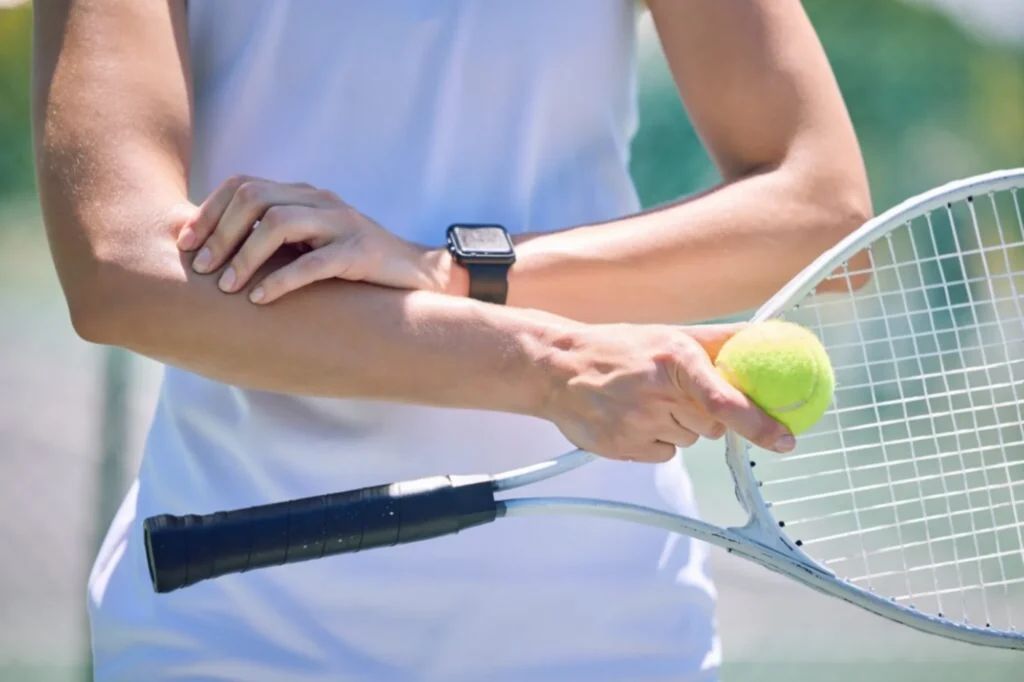
Tennis elbow symptoms may include a burning or aching sensation on the outer elbow. The pain may be mild at first, showing up only during certain exercises. Over time, it can progress to the point where gripping a barbell, opening a jar, or shaking someone’s hand becomes uncomfortable. Activities such as heavy rows, reverse curls, and even bench pressing with a tight grip can aggravate the condition.
Treatment generally starts with activity modification. This does not necessarily mean stopping all exercise, but it usually involves reducing or temporarily eliminating the movements that provoke pain. Ice, anti-inflammatory medications, and a counterforce brace may help manage symptoms. Physical therapy may also be a component of non-surgical treatment. Platelet-rich plasma (PRP) is a regenerative medicine treatment that may also be considered. If symptoms persist for several months despite conservative care, surgical options such as tendon debridement may be recommended.
Medial Epicondylitis (Golfer’s Elbow)
Golfer’s elbow affects the flexor tendons on the inner side of the elbow. These tendons control wrist flexion and gripping. In the weight room, curls, chin-ups, heavy deadlifts, and any exercise that demands a strong grip can overload these tendons. The condition tends to develop gradually. You might feel a dull ache on the inner elbow that worsens with gripping or pulling movements.
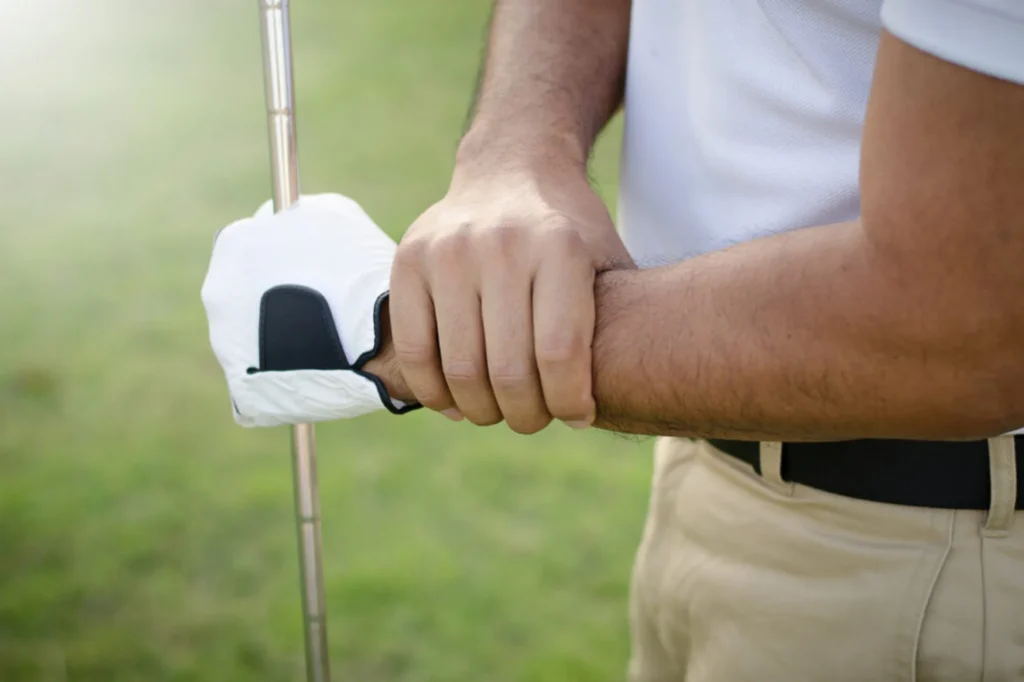
This is one of the more stubborn elbow problems from lifting weights because so many exercises require a firm grip. It can be difficult to give the tendons adequate rest while maintaining a regular training routine. Some lifters compensate by adjusting their grip width, using lifting straps, or switching to neutral grip variations to reduce stress on the medial structures.
Conservative treatment follows a similar path to tennis elbow. Rest from aggravating activities, physical therapy, bracing, and anti-inflammatory measures form the foundation. PRP injections may be recommended in certain cases. When non-surgical approaches do not yield improvement after an extended period, surgery to remove damaged tissue and repair the tendon may become an option.
Triceps Tendinitis and Posterior Elbow Pain
The triceps tendon attaches at the olecranon, the bony point at the back of the elbow. Lifters who perform heavy pressing movements, such as bench press, overhead press, dips, and skull crushers, may develop irritation or inflammation in this tendon. The condition can also occur from locking out the elbows aggressively under heavy loads.
Symptoms typically include pain at the back of the elbow, especially when straightening the arm against resistance. Swelling around the olecranon is possible. In more advanced cases, some patients report a feeling of weakness or instability during pushing exercises.
Managing triceps tendinitis usually involves reducing training volume for pressing movements and avoiding full lockout with heavy weights. Ice and anti-inflammatory medications may be advised to help control pain and swelling in the short term. Gradually reintroducing strengthening exercises under the guidance of a physical therapist may be a part of treatment.
Ulnar Nerve Irritation
The ulnar nerve runs along the inside of the elbow through a narrow channel known as the cubital tunnel. When this nerve becomes compressed or irritated, it can produce tingling, numbness, or a pins-and-needles sensation in the ring and pinky fingers. Some people describe it as the feeling you get when you hit your “funny bone.”
Certain weight training positions may contribute to irritation of the ulnar nerve in some cases. Exercises that require prolonged elbow flexion, such as preacher curls or concentration curls, may place sustained pressure on the nerve. Resting the elbows on hard surfaces between sets can also irritate it. Additionally, swelling from other elbow injuries can narrow the space around the nerve and intensify symptoms.
Mild cases may improve with simple adjustments. Avoiding positions that keep the elbow bent for extended periods, using padding on hard surfaces, and modifying grip positions can help. A night splint that prevents excessive elbow flexion during sleep may also be recommended. In cases where symptoms persist or worsen, nerve conduction studies can help determine the severity, and surgical release of the cubital tunnel may be appropriate.
Elbow Instability and Ligament Strain
The ligaments of the elbow provide stability during loaded movements. The ulnar collateral ligament (UCL) on the inner side of the elbow is particularly vulnerable in athletes who perform repetitive overhead or throwing motions, but it can also be stressed during heavy lifting. Exercises that place repetitive valgus stress on the elbow may contribute to ligament strain over time, particularly when performed with poor form or excessive load.
Symptoms of ligament-related elbow instability can include a sense of looseness in the joint, pain on the inner elbow with heavy loads, and a decrease in the ability to handle weights that were previously manageable. In severe cases, the elbow may feel as though it is going to give way.
Treatment depends on the severity of the injury. Minor sprains may respond to rest, bracing, and rehabilitation exercises designed to strengthen the muscles around the joint. More significant injuries, particularly in competitive athletes, may require surgical reconstruction.
When to See a Doctor
It can be tempting to push through elbow discomfort. However, certain warning signs may suggest that it may be time to consider professional evaluation:
- Pain that lasts more than one to two weeks despite rest and home treatment
- Swelling, warmth, or redness around the elbow joint
- Numbness or tingling that radiates into the hand or fingers
- A noticeable decrease in grip strength
- A popping, clicking, or locking sensation during movement
- Pain that wakes you up at night or interferes with daily tasks
An experienced orthopedic surgeon who specializes in upper extremity and sports medicine conditions can perform a thorough examination, order appropriate imaging if needed, and develop a personalized treatment plan.
Strategies That May Help Prevent Elbow Problems
While no strategy can guarantee you will never experience elbow problems from lifting weights, there are several approaches that may reduce your risk. Paying attention to technique is an important factor. Proper form distributes forces more evenly through the joint and reduces strain on any single structure. If you are unsure about your technique, working with a qualified coach or trainer can be valuable.
Warming up before lifting is another habit worth prioritizing. A few minutes of light cardiovascular activity followed by dynamic stretches and warm-up sets can prepare the tissues for heavier loads. Jumping straight into working sets with cold muscles and tendons may increase the risk of strain.
Progressive overload is a fundamental principle of strength training, but it should be applied thoughtfully. Increasing weight, volume, or intensity too quickly does not give tendons and ligaments adequate time to adapt. These structures generally recover more slowly than muscles. A gradual approach tends to be safer.
Varying your exercises can also help. Repeating the same movements session after session places repetitive stress on the same structures. Rotating between different grip positions, equipment types, and movement patterns distributes the workload more broadly. For example, alternating between barbell curls, hammer curls, and cable curls challenges the muscles from different angles and may reduce overuse on any one tendon.
Finally, rest and recovery deserve just as much attention as your training sessions. Adequate sleep, proper nutrition, and scheduled rest days allow your body to repair and adapt. Training through persistent pain can turn a minor irritation into a more significant problem.
Summary
Elbow problems from lifting weights are a common but manageable challenge. The elbow endures substantial stress during strength training, and the tendons, ligaments, and nerves that surround it can become injured when the demands of training exceed the body’s ability to recover. Conditions such as lateral epicondylitis, medial epicondylitis, triceps tendinitis, ulnar nerve irritation, and ligament strain each present with their own set of symptoms and require a tailored approach.
Many of these conditions tend to improve with appropriate conservative care. Recognizing early warning signs, modifying your training when something does not feel right, and seeking timely evaluation from an orthopedic specialist can make a meaningful difference in your recovery.
Frequently Asked Questions
Should I stop lifting weights entirely if my elbow hurts?
Not necessarily. In many cases, you may continue training by modifying your exercises and reducing the load on the affected area. Avoiding the specific movements that provoke pain while maintaining activity in other areas of the body is often a reasonable approach. However, if the pain is severe or worsening, it is best to consult a doctor before continuing.
How long does it take for a lifting-related elbow injury to heal?
Recovery timelines vary depending on the specific condition, its severity, and how early treatment begins. Mild tendon irritation may improve within a few weeks with rest and activity modification. More established overuse conditions can take several weeks to a few months of consistent rehabilitation, depending on severity and individual healing response. Surgical recovery often requires longer.
Are certain exercises more likely to cause elbow problems?
Exercises that place high stress on the elbow tendons and ligaments tend to carry a higher risk. Skull crushers, heavy preacher curls, barbell rows with a supinated grip, and dips are commonly associated with elbow complaints. That said, technique and load management can play a larger role than the exercise itself.
