


Total shoulder replacement has helped many patients regain mobility and find relief from chronic shoulder pain. However, like any major joint replacement, it comes with potential risks worth understanding. Among these, glenoid loosening is widely cited as one of the most commonly reported complications following anatomic total shoulder arthroplasty. In this post, we’ll cover what glenoid loosening is, why it happens, how to recognize it, and how newer implant technology aims to reduce this risk.
Key Takeaways
- Glenoid loosening is widely considered the leading cause of complications after anatomic total shoulder replacement.
- Risk factors may include implant positioning, bone quality, rotator cuff integrity, and long-term mechanical stress.
- Advances in implant design aim to reduce mechanical stress and improve long-term fixation.
- Careful surgical planning, including 3D preoperative modeling, may help optimize implant positioning and reduce the risk of loosening.
Understanding Your Shoulder Joint
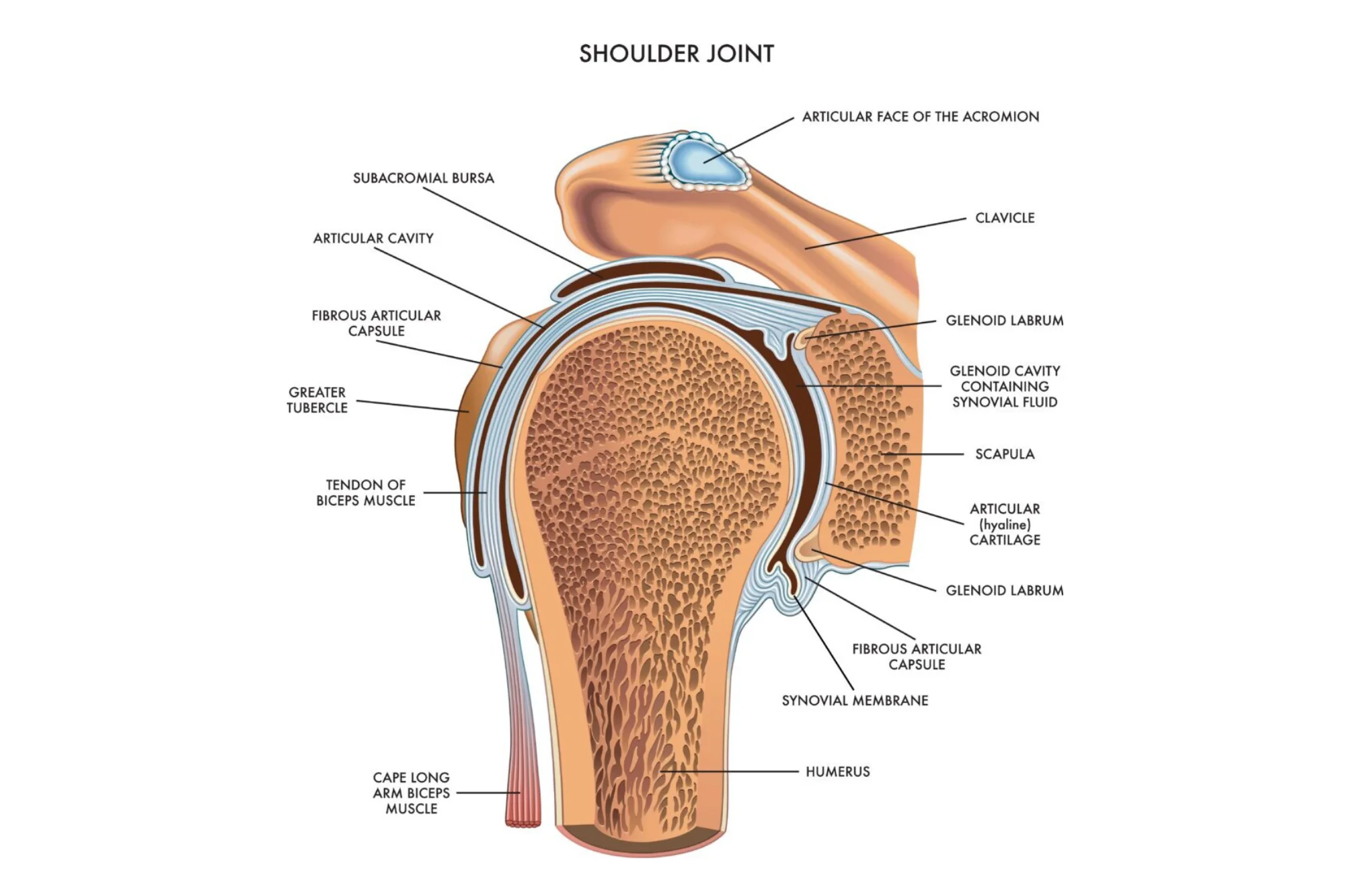
Before diving into glenoid loosening, it helps to understand basic shoulder anatomy. Your shoulder is a ball-and-socket joint made up of three bones: the humerus (upper arm bone), the scapula (shoulder blade), and the clavicle (collarbone).
The “ball” is the rounded top of your humerus, called the humeral head. The “socket” is a shallow surface on your scapula called the glenoid. Both are covered by smooth articular cartilage that allows the bones to glide painlessly against each other.
A group of muscles and tendons known as the rotator cuff surrounds and stabilizes this joint. Together with the deltoid muscle, the rotator cuff generates the shoulder movement you rely on every day. The shoulder is one of the most mobile joints in the human body, which makes it both remarkable and vulnerable to wear.
What Is Total Shoulder Replacement?
When the articular cartilage in your shoulder wears down, often due to osteoarthritis, rheumatoid arthritis, or a past injury, the joint can become painful and stiff. When conservative treatments like physical therapy, medications, and injections no longer provide adequate relief, an experienced shoulder surgeon may recommend a total shoulder replacement.
During this procedure, your surgeon replaces the damaged surfaces of both the humeral head and the glenoid with prosthetic components. The humeral head is typically replaced with a metal implant, while the glenoid surface receives a new component designed to support smooth motion. You may also hear this surgery referred to as total shoulder arthroplasty or anatomic shoulder replacement.
The results are often positive. That said, outcomes can vary, and no surgery comes with a guarantee.
What Is Glenoid Loosening?
Glenoid loosening refers to a situation in which the artificial socket component of a shoulder replacement no longer remains firmly anchored to the bone. Instead of staying securely fixed, the implant may gradually shift or lose stability over time.
Research has consistently identified glenoid loosening as one of the most common reasons for revision surgery after total shoulder arthroplasty. Rates can vary depending on patient age, activity level, and the type of implant used. When glenoid loosening occurs, patients may need a second surgery called revision shoulder arthroplasty. This is something both surgeons and patients naturally want to avoid when possible.
Why Does Glenoid Loosening Happen?
The causes of glenoid loosening are multifactorial. Several variables can contribute, and in many cases, more than one factor may be at play:
- The “rocking horse” effect: When the humeral component shifts upward due to rotator cuff weakness or imbalance, it can cause the glenoid implant to tip back and forth with repeated use. This loading pattern places uneven stress on the glenoid component and may gradually loosen it from the bone.
- Bone quality and glenoid wear: Patients with significant bone loss or poor bone density at the time of surgery may have less structural support for the implant. Pre-existing glenoid wear patterns can also make secure fixation more challenging.
- Implant alignment: How the glenoid component is positioned during surgery plays an important role. Research has shown that even small deviations in alignment can increase stress at the bone-implant interface and accelerate loosening.
- Cement degradation: Many traditional glenoid components rely on bone cement for fixation. Over time and with repeated loading, the cement mantle can develop microcracks that compromise its hold on the implant.
- Rotator cuff insufficiency: A weakened or torn rotator cuff can alter shoulder mechanics and place abnormal forces on the glenoid component, potentially speeding up the loosening process.
Understanding these factors helps illustrate why glenoid loosening has remained a persistent challenge in shoulder surgery, along with why innovation in this area is so important.
Recognizing the Signs of Glenoid Loosening
If you have had a total shoulder replacement, it is important to stay in tune with how your shoulder feels over time. Glenoid loosening does not always show up right away. In many cases, it develops gradually over months or years.
Some of the more commonly reported symptoms include shoulder pain that returns after an initial pain-free recovery period, new or worsening stiffness that limits your range of motion, clicking, clunking, or grinding sensations during movement, and a feeling of instability or weakness in the shoulder.
These symptoms are not exclusive to glenoid loosening. Other issues like infection or soft tissue problems can produce similar complaints. That is why regular follow-up appointments with your surgeon are so valuable. Imaging studies, especially X-rays and CT scans, can often detect early signs of loosening before symptoms become severe.
How Technology Aims to Combat Glenoid Loosening
The InSet® Shoulder Implant System, developed by Shoulder Innovations, takes a fundamentally different approach to glenoid implant design and fixation.
Traditional glenoid implants sit on top of the glenoid bone surface. They are typically cemented in place using pegs or a keel that extend into the bone. While this approach has a long track record, it also exposes the implant to the mechanical stresses that can lead to loosening over time.
The InSet® glenoid implant works differently. Instead of resting on the surface, it is placed within the strongest, most supportive bone of the glenoid. This “inset” placement is designed to distribute forces more evenly and reduce the mechanical stress that contributes to loosening.
According to computer-based mechanical modeling (Finite Element Analysis), stress on the InSet® glenoid implant may be reduced by as much as 87% compared to traditional designs. This substantial reduction in modeled stress may translate to improved long-term implant stability. It’s one of the primary reasons that I use the InSet® system.
The Role of 3D Surgical Planning
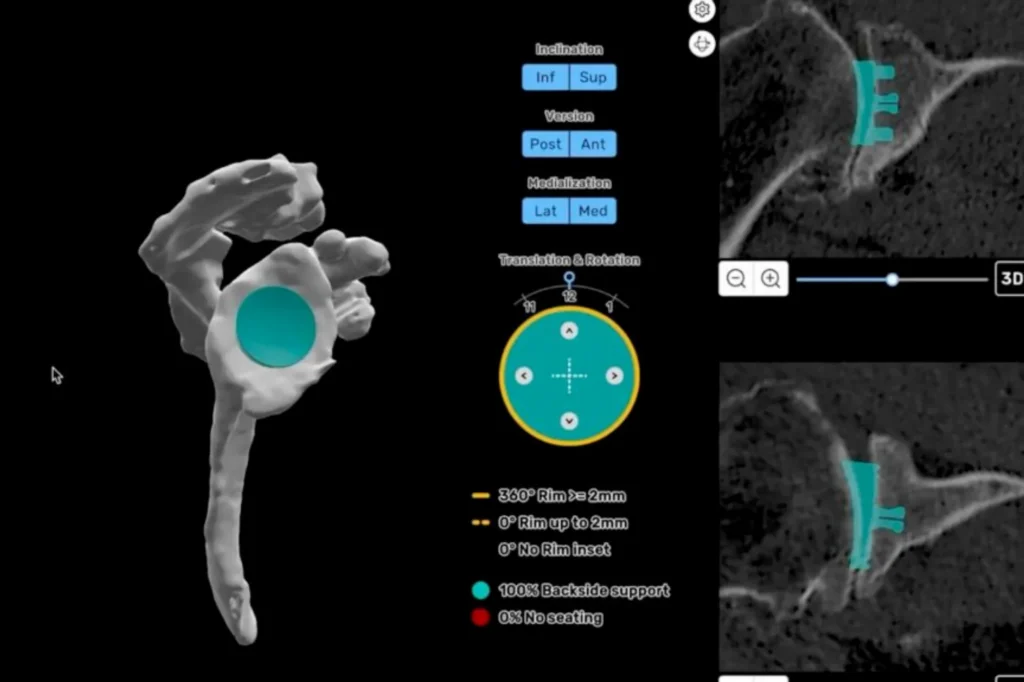
Implant design is only part of the equation. How well that implant is planned and positioned during surgery also matters tremendously. I use ProVoyance®, an automated computerized planning software that supports the InSet® system. Before your surgery, a CT scan of your shoulder is converted into a three-dimensional digital model of your bones. I then use this model to determine the optimal implant type, size, and position for your unique anatomy.
This process is essentially a virtual surgery. It allows a surgeon to evaluate your shoulder from every angle, identify bone loss or irregularities, and plan the procedure with remarkable precision. Preoperative planning like this has been shown to help improve implant positioning, which can help reduce the risk of glenoid loosening.
For patients, the benefit is straightforward: a shoulder replacement surgery that is tailored specifically to your body, not a one-size-fits-all solution.
Bone Preservation Design
One reality of joint replacement surgery is that some patients may eventually need a second procedure. This is especially relevant for younger, more active patients who place higher demands on their implants over time.
The InSet® system is designed with this possibility in mind. Because the glenoid implant sits within the bone rather than on top of it, it tends to preserve more of the surrounding bone structure. Preserving bone stock may be advantageous if revision surgery ever becomes necessary, as adequate remaining bone can expand future reconstructive options.
What You Can Do as a Patient
While implant technology and surgical technique play a major role in outcomes, your involvement as a patient matters too. If you are preparing for or recovering from a total shoulder replacement, a few proactive steps may help protect the longevity of your implant.
First, commit to your rehabilitation program. The rehabilitative process, often including physical therapy, is important for restoring strength and rotator cuff balance after surgery. Second, attend all scheduled follow-up appointments so your surgeon can monitor your implant with imaging over time. Third, maintain a healthy lifestyle. Finally, communicate openly with your surgeon about any new or returning symptoms. Early detection can support better outcomes.
Summary
Total shoulder replacement remains one of the most effective procedures for relieving shoulder pain and restoring function in patients with advanced arthritis or shoulder damage. However, glenoid loosening remains one of the most frequently cited reasons for revision surgery after anatomic shoulder replacement. Fortunately, advances in implant design and surgical planning are helping to address this challenge. No surgical procedure can guarantee a perfect outcome, but choosing an experienced shoulder specialist who uses evidence-based technology can help put the odds in your favor.
Frequently Asked Questions
What is glenoid loosening?
Glenoid loosening is a condition where the prosthetic socket component of a total shoulder replacement shifts or loses its secure bond to the underlying bone over time. It is widely recognized as one of the leading causes of revision surgery after anatomic total shoulder arthroplasty.
What are the symptoms of glenoid loosening?
Common symptoms may include returning shoulder pain after an initial pain-free period, new stiffness or reduced range of motion, clicking or clunking sensations, and a general feeling of shoulder instability. If you experience any of these after a shoulder replacement, consider contacting your surgeon for evaluation.
How does the InSet® implant help prevent glenoid loosening?
The InSet® Glenoid is placed within the strongest bone of the glenoid rather than on top of the surface. This unique positioning has been shown in testing to reduce stress on the implant by up to 87% compared to traditional designs.
