


Shoulder pain can interfere with your daily activities, from reaching overhead to performing simple tasks like getting dressed. When conservative treatments don’t provide adequate relief, many patients wonder about their options before considering surgery. Platelet-rich plasma (PRP) for shoulder pain has emerged as a regenerative treatment option that may help certain patients manage their symptoms and potentially promote healing.
Key Takeaways
PRP therapy uses concentrated platelets from your own blood to potentially stimulate tissue healing.
It may be considered for rotator cuff tendinitis, partial tears, and osteoarthritis when conservative measures haven’t provided relief.
The procedure involves drawing blood, processing it to concentrate platelets, and injecting the PRP into the affected area.
What Is Platelet-Rich Plasma?
Platelet-rich plasma represents a concentration of platelets derived from your own blood. Platelets are small cell fragments that play a key role in blood clotting and wound healing. Beyond their clotting function, these components contain numerous growth factors and proteins that may help promote tissue regeneration and reduce inflammation.
Through centrifugation, the platelet count in the processed sample can be increased to levels far higher than what’s normally found in whole blood. This concentrated solution is then prepared for injection into the injured or painful area of your shoulder.
The biological rationale centers on delivering high concentrations of growth factors directly to damaged tissues, potentially enhancing the body’s natural healing response. While exact mechanisms are still being studied, researchers believe PRP may influence inflammation, cell proliferation, and tissue remodeling.
Shoulder Conditions That May Benefit from PRP
PRP may be recommended for an array of shoulder conditions. Rotator cuff tendinitis and tendinosis involve inflammation or degeneration of the tendons that stabilize your shoulder. When these tendons become irritated or worn down over time, they can cause persistent pain and weakness. PRP injections may help stimulate healing in these inflamed or degenerative tissues.
Partial rotator cuff tears present another potential application. Unlike complete tears that often require surgical repair, partial tears involve damage to only a portion of the tendon. For select patients with partial tears who haven’t responded to conservative treatment, PRP might offer a nonsurgical option.
Shoulder osteoarthritis, particularly in earlier stages, represents another condition where PRP has shown promise. Some studies suggest that injections might help reduce pain and improve function in patients with mild to moderate arthritis.
PRP vs Cortisone Injections for Shoulder Pain
Patients considering PRP for shoulder pain often ask how it compares to corticosteroid (cortisone) injections. Both are commonly used nonsurgical treatments, but they work in different ways and may serve different goals depending on the condition being treated.
Corticosteroid injections are primarily used to reduce inflammation. They can provide relatively quick pain relief, particularly during inflammatory flare-ups, and may be helpful for short-term symptom control. However, their effects are often temporary, and repeated steroid injections may carry potential risks, including tendon weakening when used frequently.
PRP injections, by contrast, are not primarily aimed at immediate pain suppression. Instead, PRP delivers a concentrated dose of platelets and growth factors derived from your own blood, with the goal of supporting the body’s natural healing response over time. For this reason, symptom improvement with PRP may occur more gradually and vary from person to person.
Your doctor can help determine which approach, if any, is most appropriate based on your diagnosis, symptom severity, prior treatments, activity level, and overall goals.
The PRP Procedure: What to Expect
Understanding what happens during a PRP treatment can allow you to prepare appropriately. The process generally occurs in an outpatient setting and typically takes about an hour from start to finish.
Blood Collection
The procedure begins with a blood draw, similar to routine laboratory testing. Most patients find this step straightforward and well-tolerated.
Processing and Concentration
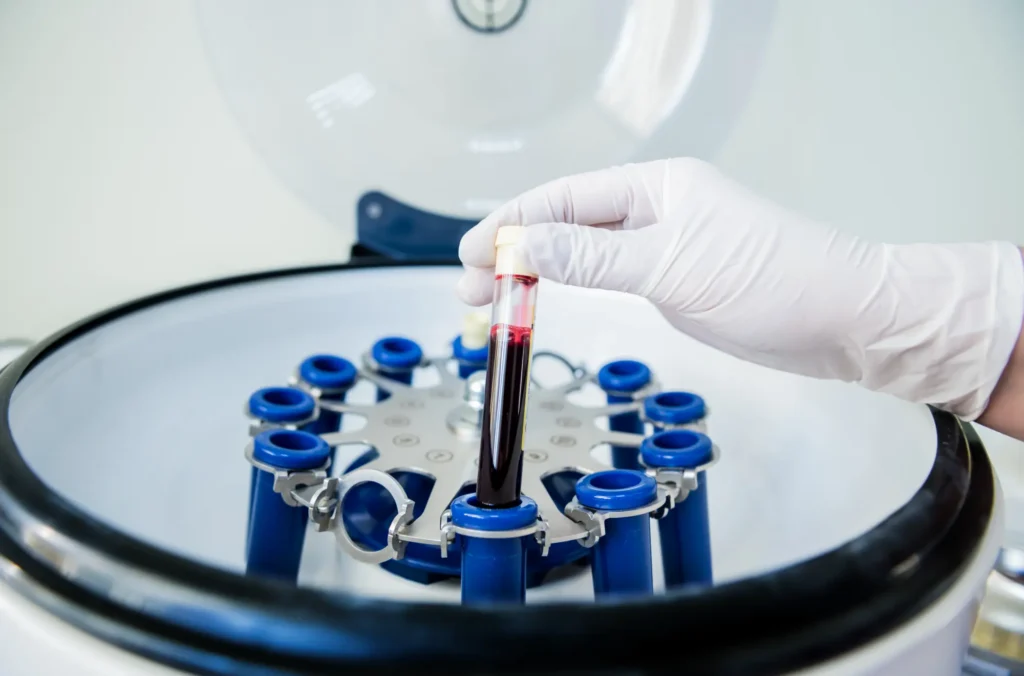
Once collected, your blood is placed in a centrifuge that spins at high speeds to separate blood components. The process typically takes 10-15 minutes. The blood separates into layers: red blood cells, platelet-poor plasma, and platelet-rich plasma. The platelet-rich layer will be prepared for injection.
Injection
Before the injection, your shoulder area will be cleaned and sterilized. In some cases, ultrasound guidance may be used to support accurate delivery of the PRP to the targeted tissue. The actual injection typically takes just a few minutes. You might feel pressure or mild discomfort, but most patients tolerate it well.
Post-Procedure Protocol
After the injection, you’ll rest briefly before being discharged. Anti-inflammatory medications like ibuprofen are generally avoided for several weeks after treatment, as these might interfere with the healing response PRP aims to promote. Ice may be recommended for immediate discomfort.
Recovery and Rehabilitation
During the first few days after treatment, you might experience increased soreness in your shoulder. This is generally considered a normal response. Many patients describe this as an aching sensation that gradually improves over the first week.
Activity modification typically forms an important part of the recovery protocol. Your doctor will likely recommend avoiding strenuous overhead activities, heavy lifting, and repetitive shoulder movements for at least one to two weeks. This allows the PRP to work without excessive mechanical stress.
Physical therapy often plays a role in outcomes. While you might need to temporarily pause therapy immediately after the injection, a progressive rehabilitation program usually resumes within a week or two. Your therapist will work with you to gradually restore strength and flexibility.
The timeline for experiencing benefits varies considerably. Some report improvement within a few weeks, while others may not notice significant changes for two to three months. This variability reflects the biological nature of tissue healing.
Some treatment protocols involve one to three PRP injections spaced several weeks apart. Your doctor will determine the appropriate number based on your specific condition and response to initial treatment.
Who Is a Good Candidate for PRP?
Determining whether PRP for shoulder pain might be appropriate involves considering several factors. An experienced shoulder specialist can evaluate your specific situation to help guide treatment decisions.
Ideal candidates typically have tried conservative treatments without achieving adequate relief. This may include rest, physical therapy, and anti-inflammatory medications. Some patients may have also tried corticosteroid injections with limited benefit. The specific diagnosis matters significantly. Certain conditions like tendinopathy, partial tears, and early-stage arthritis may be more likely to respond than others.
Summary
PRP for shoulder pain represents an evolving regenerative treatment option that may benefit certain patients with specific shoulder conditions. By concentrating platelets and growth factors from your own blood, PRP aims to enhance the body’s natural healing response. Platelet-rich plasma injections may help reduce pain and improve function in conditions like rotator cuff tendinopathy, partial tears, and early-stage osteoarthritis. Individual results vary. PRP isn’t appropriate for all shoulder conditions and works best as part of a comprehensive treatment plan. If you’re experiencing persistent shoulder pain that hasn’t responded to conservative treatment, discussing whether PRP might be appropriate with your doctor can help you make an informed decision about your care.
Frequently Asked Questions
How long does it take for PRP to work for shoulder pain?
The timeline varies significantly. Some people notice improvement within 2-4 weeks, while others may not experience meaningful changes for 2-3 months. The growth factors in PRP need time to stimulate tissue healing, which occurs gradually.
How many PRP injections will I need?
The number varies based on your condition, its severity, and your response to treatment. Some protocols involve several injections spaced weeks apart. Some patients find relief after one injection, while others benefit from a series. Your doctor will recommend a tailored treatment plan.
What should I avoid after a PRP injection?
Most doctors recommend avoiding anti-inflammatory medications like ibuprofen for several weeks, as these might interfere with healing. You’ll likely be advised to limit strenuous activities, heavy lifting, and repetitive overhead movements for 1-2 weeks. Ice may be recommended for immediate discomfort.
