


If you are an athlete dealing with persistent shoulder pain, you probably already know how much it can affect your performance and your everyday life. A rotator cuff tear in athletes is one of the most common shoulder injuries I treat in my practice, and it can range from a frustrating but manageable setback to a disruption of your athletic career. The question I hear most often in the exam room is: “Do I need surgery?” The honest answer is that it depends. Many factors come into play, and understanding them can help you and your care team choose the approach that is right for your specific situation.
Key Takeaways
- Rotator cuff tears in athletes can be partial or full-thickness, and the size and type of the tear often guide treatment decisions.
- Not every rotator cuff tear requires surgery. Many athletes respond well to physical therapy, activity modification, and other non-surgical treatments.
- Certain factors, including the size of the tear, your activity level, your age, and how much your symptoms affect daily function, may make surgery a more appropriate choice.
- Recovery from rotator cuff surgery generally takes several months, and return-to-sport timelines can vary widely based on the type of repair and the demands of your sport.
Understanding the Rotator Cuff
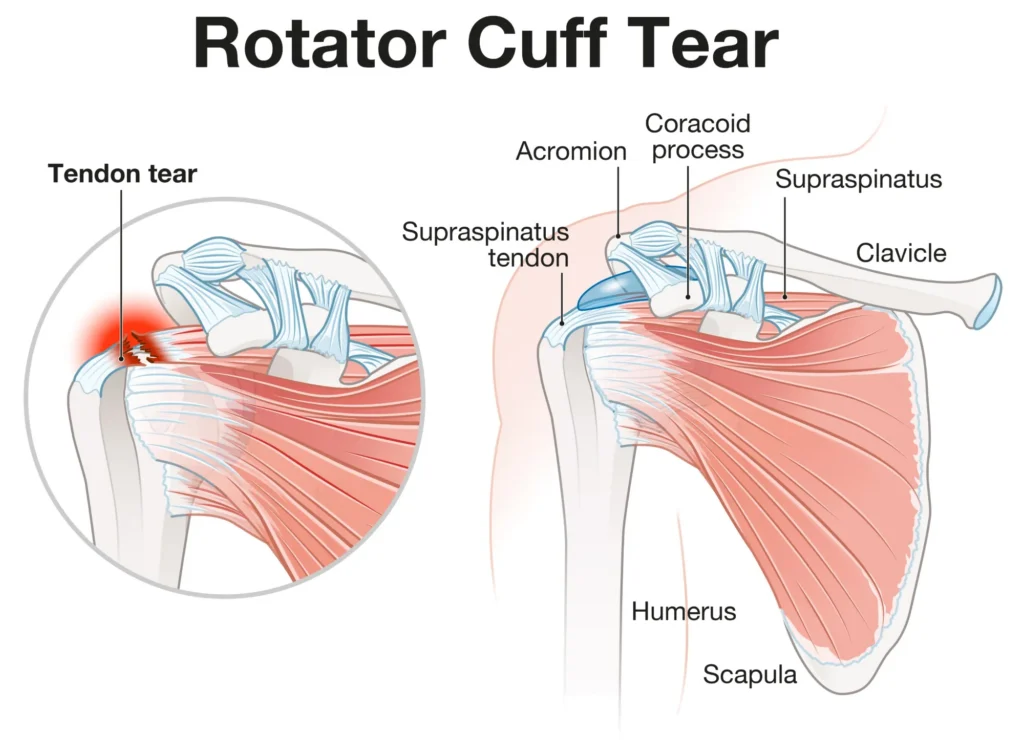
The rotator cuff is a group of four muscles and their tendons that work together to stabilize and move the shoulder joint. These muscles, the supraspinatus, infraspinatus, teres minor, and subscapularis, surround the head of the humerus (upper arm bone) and keep it centered within the socket. They also provide the power and control needed for overhead motions, throwing, lifting, and reaching.
In athletes, the rotator cuff takes on a tremendous amount of repetitive stress. Consider a pitcher delivering a 90-mile-per-hour fastball, a competitive swimmer logging thousands of yards per week, or a weightlifter pressing heavy loads overhead. All of these athletes place significant demands on the tendons. Over time, that accumulated stress may contribute to the development of a tear.
Rotator cuff tears generally fall into two categories. A partial-thickness tear means the tendon is damaged but not completely severed. A full-thickness tear, sometimes called a complete tear, means the tendon has torn all the way through. Full-thickness tears may be further classified by their size, which can play an important role in determining how well the shoulder may respond to non-surgical treatment and which surgical approach might be most appropriate.
How Rotator Cuff Tears Happen in Athletes
Rotator cuff tears in athletes tend to develop through one of two mechanisms: a sudden acute injury or gradual, cumulative overuse.
Acute tears happen during a specific traumatic event. A hard fall onto an outstretched arm, a sudden forceful pull, or a collision can cause a tendon to tear in an instant. Athletes in contact sports may be particularly susceptible to this type of injury. These tears are often more clearly defined, and the athlete usually recalls exactly when the injury happened.
Overuse tears are more common among overhead athletes. Repetitive overhead motions place sustained and cyclical stress on the rotator cuff tendons. Over time, that repeated strain may cause the tendon fibers to gradually break down, a process sometimes referred to as degenerative tearing. With this type of injury, many athletes cannot pinpoint a single event that caused the damage. The symptoms tend to build slowly.
Age is also a contributing factor. As we get older, our tendons can lose some of their elasticity and blood supply. This may make them more vulnerable to injury, even during relatively low-intensity activities. That said, rotator cuff tears are not exclusive to older athletes. High-level younger athletes who place extreme and repeated demands on their shoulders can also develop tears.
Recognizing the Symptoms
Not all rotator cuff tears produce the same symptoms. In some cases, a tear may cause little to no discomfort, at least initially. As the injury progresses or the demands on the shoulder increase, symptoms often become more noticeable.
Pain is the most common complaint. It typically radiates along the outer part of the shoulder and may travel down the upper arm. Athletes often notice that the pain intensifies during overhead activities, when reaching across the body, or when lifting the arm to the side. Night pain is another symptom I hear about frequently. Many patients describe difficulty sleeping on the affected side, and some find themselves waking up due to discomfort.
Weakness is another potential sign. You may notice that it is harder to lift your arm overhead or out to the side, or that you have lost some power when throwing, serving, or pressing. A catching sensation, clicking, or the feeling that the shoulder is not moving smoothly through its range of motion can also occur. If any of these symptoms sound familiar, it may be worth seeking an evaluation.
Non-Surgical Treatment: A Strong First Step for Many Athletes
One of the most important things I want athletes to understand is that not every rotator cuff tear requires surgery. In fact, many athletes, particularly those with partial tears or smaller full-thickness tears, may achieve meaningful pain relief and functional improvement through non-surgical treatment. An experienced sports shoulder specialist can evaluate the tear and help guide the most appropriate treatment plan for you.
Physical therapy is typically a key component of conservative management. A well-structured program can help strengthen the muscles surrounding the shoulder, restore flexibility, improve movement patterns, and reduce pain. In my experience, many athletes who commit to a consistent and progressive therapy program over several months often see improvement.
Anti-inflammatory medications may help manage acute pain and swelling. More recently, biologic treatments such as platelet-rich plasma (PRP) have emerged as a possible option for certain tendon injuries. The research in this area is still evolving, and PRP is not appropriate for every situation, but it may be worth discussing with your specialist.
Activity modification is another key component. Temporarily adjusting training volume, avoiding aggravating positions, or refining technique may allow the shoulder enough relief to progress through therapy. The success of non-surgical treatment depends on the size and type of the tear, your specific sport and its demands, your age, and how the shoulder responds over time.
When Surgery May Be the Right Option
While conservative treatment works well for many athletes, there are situations in which surgery may offer a better path to recovery. This is a decision I discuss carefully and individually with each patient, because the right choice truly depends on your unique circumstances.
Some of the key factors that may point toward surgical repair include:
- Large or full-thickness tears: Complete tears are less likely to improve on their own and may worsen over time without surgical intervention.
- Failed conservative treatment: If you have committed to a structured physical therapy program over a period of time without meaningful improvement, surgery may be the appropriate next step.
- Significant functional loss: When weakness and pain prevent you from participating in your sport or completing everyday tasks, surgical repair may offer a better chance of restoring shoulder function in certain patients.
- Acute tears in young, active athletes: A sudden traumatic tear in a younger athlete with high functional demands is often a scenario where early surgical intervention may be favored. These tears tend to have good healing potential, and prompt repair may optimize the outcome.
- High sport-specific demands: Certain athletes, particularly overhead throwers, competitive swimmers, or high-level weightlifters, may require a greater level of shoulder strength and function than conservative treatment alone can restore.
What Rotator Cuff Surgery Typically Involves
Rotator cuff repair is most commonly performed arthroscopically, through small incisions using a tiny camera and specialized instruments. During the procedure, the goal is to reattach the torn tendon to the bone using small anchors. If there is additional damage present inside the shoulder, such as a labral tear, a bone spur, or inflammation in the bursa, those issues can often be addressed during the same operation.
The specific technique used may vary based on the size and pattern of the tear, your shoulder anatomy, and other individual factors. During your consultation, I will take the time to thoroughly review your imaging, assess your shoulder examination, and walk you through which approach may be most appropriate for your particular situation. My goal is always to ensure that you understand your options and feel confident in the plan we decide on together.
Recovery and Return to Sport
The timeline to recover from rotator cuff surgery can vary considerably based on the size of the tear, the type of repair performed, and the demands of your sport.
In the initial weeks after surgery, the focus is on protecting the repaired tendon while it heals to the bone. This typically involves wearing a sling and limiting shoulder movement for several weeks. Formal physical therapy usually begins shortly after surgery, starting with gentle range-of-motion exercises and progressing gradually to more active strengthening work as healing advances.
For many athletes, a return to light sport-specific activity may be possible around the four-to-six-month mark. However, returning to full, unrestricted participation, especially in high-demand overhead sports like throwing or competitive swimming, may take nine months to a year or more. It’s important to remember that everyone heals at a different pace.
Summary
A rotator cuff tear in athletes is a significant injury, but it is not always a career-defining one. Many athletes can manage their symptoms effectively without surgery, particularly with smaller or partial tears and a dedicated commitment to conservative treatment. For others, surgical repair may be the best path forward.
The most important step you can take is getting an accurate diagnosis and working with a specialist who understands both the nature of your injury and the demands of your sport. Every athlete is different, and the treatment plan should reflect your individual goals, your anatomy, and your overall health. If you are dealing with shoulder pain that is limiting your athletic performance or your daily life, I encourage you to seek an evaluation sooner rather than later.
Frequently Asked Questions
How do I know if my rotator cuff tear is severe enough to need surgery?
Several factors are weighed together, including the size and type of the tear, the degree of weakness and pain you are experiencing, your age and activity level, and whether you have already tried conservative treatment. An MRI combined with a thorough physical examination and an honest conversation about your goals can help clarify whether surgery is the most appropriate next step.
Will I be able to return to my sport after rotator cuff surgery?
Many athletes do return to sport following rotator cuff repair, though the timeline and level of return can vary. Younger athletes with acute traumatic tears and those participating in lower-demand sports may have a stronger likelihood of returning to their previous level. The specific sport, the size and nature of the tear, and the quality of post-operative rehabilitation all play important roles in how complete the recovery may be.
What happens if I delay treatment for a rotator cuff tear?
For larger tears, delaying evaluation and treatment may allow the tendon to retract further from its attachment point and may contribute to progressive muscle weakening, both of which can make surgical repair more technically challenging and may affect long-term outcomes. For smaller or partial tears, the consequences of a delay may be less significant, but monitoring symptoms with the guidance of a specialist is still a reasonable and advisable approach.
