


A shoulder fracture is an injury that involves a break in one or more of the bones that make up the shoulder joint. When a bone in the shoulder breaks, it can significantly affect your ability to perform everyday tasks like reaching for items, lifting objects, or even getting dressed. Understanding what happens when you experience a shoulder fracture, recognizing the symptoms, and knowing your treatment options can help you make informed decisions about your care and recovery.
Key Takeaways
- Shoulder fractures involve breaks in the humerus, scapula, or clavicle, with each bone requiring different treatment considerations based on the fracture location and severity.
- Common causes include falls, sports injuries, motor vehicle accidents, and osteoporosis-related fractures in older adults.
- Symptoms often include intense pain, swelling, bruising, limited range of motion, and visible deformity in some cases.
- Treatment ranges from non-surgical approaches like immobilization and physical therapy to surgical intervention in more complex cases.
What is a Shoulder Fracture?
The shoulder joint represents one of the most mobile joints in the human body, allowing us to reach in virtually any direction. However, this mobility comes with less inherent bony stability compared to other joints, making the shoulder vulnerable to various injuries, including fractures. A shoulder fracture refers to a break in any of the three bones that form the shoulder complex. The proximal humerus is one of the most commonly fractured bones in the shoulder region, particularly in older adults. The clavicle is also frequently fractured, particularly in children, adolescents, and younger adults. Scapular fractures, while less common, typically result from high-energy trauma.
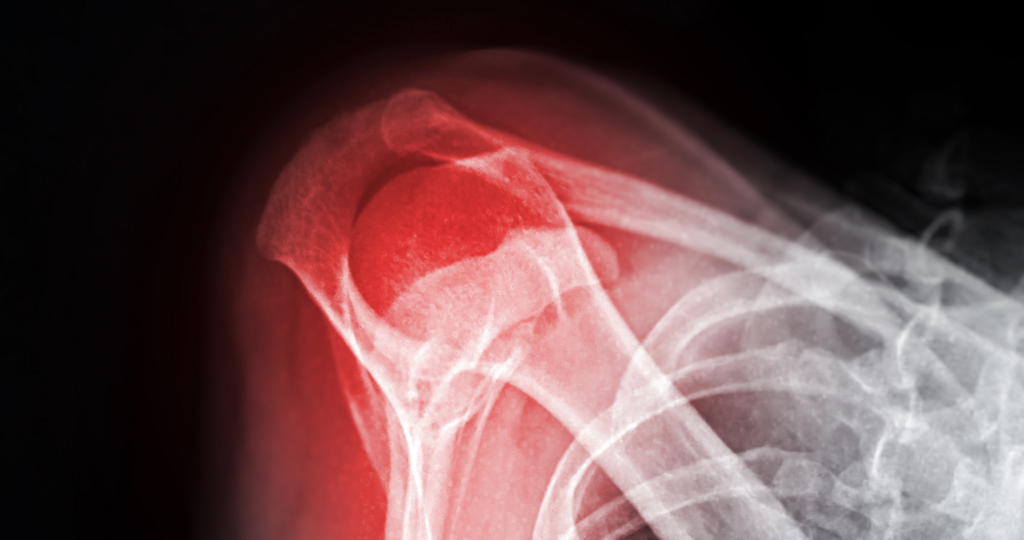
Fractures can be classified in several ways. A closed fracture means the bone is broken but the skin remains intact, while an open fracture involves the broken bone piercing through the skin. Fractures can also be displaced, where fragments have moved out of alignment, or non-displaced, where pieces remain relatively close to their original position.
Common Causes of Shoulder Fractures
Shoulder fractures can result from various mechanisms of injury, with the specific cause often related to the patient’s age and activity level.
Falls represent one of the most frequent causes of shoulder fractures across all age groups. In older adults, particularly those with osteoporosis, even a relatively minor fall from standing height can result in a fracture. Younger individuals may fracture their shoulder from falls during activities like cycling, skateboarding, or climbing. Contact sports like football, hockey, and rugby involve collisions that can generate enough force to fracture shoulder bones.
Motor vehicle accidents can cause shoulder fractures through direct impact or through the restraining force of a seatbelt during sudden deceleration. These high-energy injuries may be associated with more complex fracture patterns. Direct trauma to the shoulder from a blow or impact can also result in fractures. The specific bone that breaks depends on the direction and magnitude of the force applied.
Recognizing the Symptoms
While symptoms can vary depending on the location and severity of the fracture, certain signs are commonly present. Pain is typically a prominent symptom of a shoulder fracture. The pain is often immediate, severe, and localized to the affected area. It tends to worsen with any attempt to move the shoulder or arm, and may be described as sharp, throbbing, or aching.
Swelling around the shoulder usually develops relatively quickly following the injury. This swelling may be accompanied by bruising, which can appear within hours or develop over the following days. The bruising may extend down the arm or across the chest, depending on the fracture location.
Limited range of motion is another possible symptom of shoulder fractures. You may find it difficult or impossible to lift your arm, reach overhead, or move your shoulder in certain directions. Some patients instinctively hold their arm close to their body in a protective position.
In some cases, particularly with displaced fractures, there may be a visible deformity of the shoulder. The normal contour might appear irregular, or you may notice a bump or depression where the bone has shifted. Additional symptoms can include a grinding sensation when the shoulder is moved, numbness or tingling in the arm or hand if nerves are affected, and weakness that makes it difficult to use the affected arm.
Diagnosing a Shoulder Fracture
When you seek medical attention for a suspected shoulder fracture, your doctor will typically begin with a thorough evaluation. This assessment helps determine not only whether a fracture is present but also the specific characteristics of the break.
The initial evaluation involves a detailed discussion of how the injury occurred, your symptoms, and your medical history. During the physical examination, your doctor will inspect the shoulder, looking for swelling, bruising, or deformity. They may gently palpate around the shoulder to identify areas of tenderness and check the neurovascular status of your arm.
Imaging studies may be ordered to support the diagnosis. X-rays remain the primary imaging modality for evaluating shoulder fractures. Multiple views are obtained to visualize the bones from different angles, helping identify the fracture location, pattern, and degree of displacement.
In some cases, particularly when the fracture is complex or involves the joint surface, additional imaging may be necessary. A CT scan provides detailed cross-sectional images that can reveal fracture fragments more precisely. MRI may be ordered if there’s concern about associated soft tissue injuries, such as rotator cuff tears.
Non-Surgical Treatment Options
Many shoulder fractures can often be managed without surgery, particularly those that are non-displaced or minimally displaced and stable. Non-surgical treatment focuses on allowing the bone to heal naturally while maintaining comfort and preventing complications.
Immobilization
The cornerstone of non-surgical treatment is immobilization, which protects the fracture site and allows the bone to heal. For most shoulder fractures, this involves using a sling that keeps the arm supported against the body. Some fractures may require a more specialized brace. The duration of immobilization varies depending on the specific fracture and the patient’s healing progress.
Pain Management
Managing pain effectively is an important aspect of non-surgical treatment. Ice packs may help reduce swelling and provide pain relief when applied for 15-20 minutes several times a day. Over-the-counter pain relievers like acetaminophen or NSAIDs may also be recommended.
Physical Therapy and Rehabilitation
Once the initial healing phase has begun and your doctor determines it’s appropriate to start moving the shoulder, physical therapy often becomes a component of treatment. The goals are to gradually restore range of motion, rebuild strength, and improve overall shoulder function. Early in rehabilitation, exercises typically focus on gentle passive and assisted range of motion. These exercises help prevent stiffness without putting excessive stress on the healing bone. As healing progresses, active range of motion and strengthening exercises are introduced.
When Surgery May Be Necessary
While many shoulder fractures heal well with non-surgical treatment, certain situations may warrant surgical intervention. Surgery is typically considered when the fracture is unlikely to heal properly on its own.
Open reduction and internal fixation (ORIF) is a common surgical approach where the fracture is exposed through an incision, the bone fragments are realigned, and metal hardware such as plates and screws is used to hold the pieces in place. This technique is often employed for clavicle fractures and certain types of proximal humerus fractures.
When a fracture is particularly complex or involves damage to the humeral head, especially in older patients, shoulder replacement surgery might be recommended. Reverse shoulder replacement may be considered when the fracture is associated with rotator cuff damage. An experienced shoulder surgeon can recommend the most appropriate surgical option for your specific fracture.
Prevention Strategies
While not all shoulder fractures can be prevented, certain strategies may help reduce your risk of experiencing this injury.
For older adults, fall prevention is particularly important. This includes maintaining a safe home environment by removing tripping hazards, ensuring adequate lighting, using handrails on stairs, and installing grab bars in bathrooms. Vision checks and appropriate footwear can also help prevent falls.
Maintaining bone health becomes increasingly important with age. Adequate intake of calcium and vitamin D supports bone strength. Weight-bearing exercises and resistance training help maintain bone density. For individuals at risk of osteoporosis, screening and treatment when appropriate may help reduce fracture risk.
Practicing proper technique and safety during sports may help prevent trauma-related fractures. This includes wearing appropriate protective equipment, warming up before exercise, and learning proper mechanics.
Summary
A shoulder fracture is a break in one of the bones that make up the shoulder complex, most commonly affecting the proximal humerus, clavicle, or scapula. These injuries can result from falls, sports trauma, motor vehicle accidents, or minimal trauma in individuals with osteoporosis. Treatment approaches vary based on the fracture characteristics and individual patient factors. Non-surgical management with immobilization, pain control, and progressive rehabilitation works well for many fractures. However, surgical intervention may be recommended for some complex fractures.
Frequently Asked Questions
Can I move my arm if I have a shoulder fracture?
If you suspect a shoulder fracture, it is generally advisable to minimize movement and seek medical attention promptly. While some individuals with non-displaced fractures might be able to move their arm slightly despite pain, attempting to use the shoulder normally may potentially worsen the injury. Your doctor will provide specific guidance about safe movements during healing.
Will I need physical therapy for a shoulder fracture?
Physical therapy is typically an important component of recovery from most shoulder fractures. The therapy program helps restore range of motion, rebuild strength, and improve overall function. The specific exercises and duration vary based on your individual situation.
Can a shoulder fracture heal without treatment?
While some fractures might technically heal without formal treatment, this approach is generally not recommended. Without proper immobilization and alignment, the bone may heal in an incorrect position (malunion) or may not heal at all (nonunion), potentially leading to chronic pain, limited function, and the need for more complex treatment later.
