


Falls happen fast. One moment you’re reaching to catch yourself, and the next, you’re on the ground. Understanding your shoulder injury from a fall is often the first step toward recovering well. The shoulder is one of the most complex and mobile joints in the body, which also makes it one of the most vulnerable when you land on an outstretched arm or take a direct blow to the side. Knowing what may have been injured, and why it matters, can help you make better decisions about when to seek care and what to expect on the road ahead.
Key Takeaways
- Falls can injure multiple shoulder structures at once, including bones, tendons, and cartilage.
- Even if you can still move your arm, an injury may still be present.
- Prompt evaluation by a shoulder specialist can help identify injuries early and guide appropriate treatment.
- Treatment options range from conservative care to surgery, depending on the type and severity of the injury.
Why the Shoulder Is So Vulnerable in a Fall
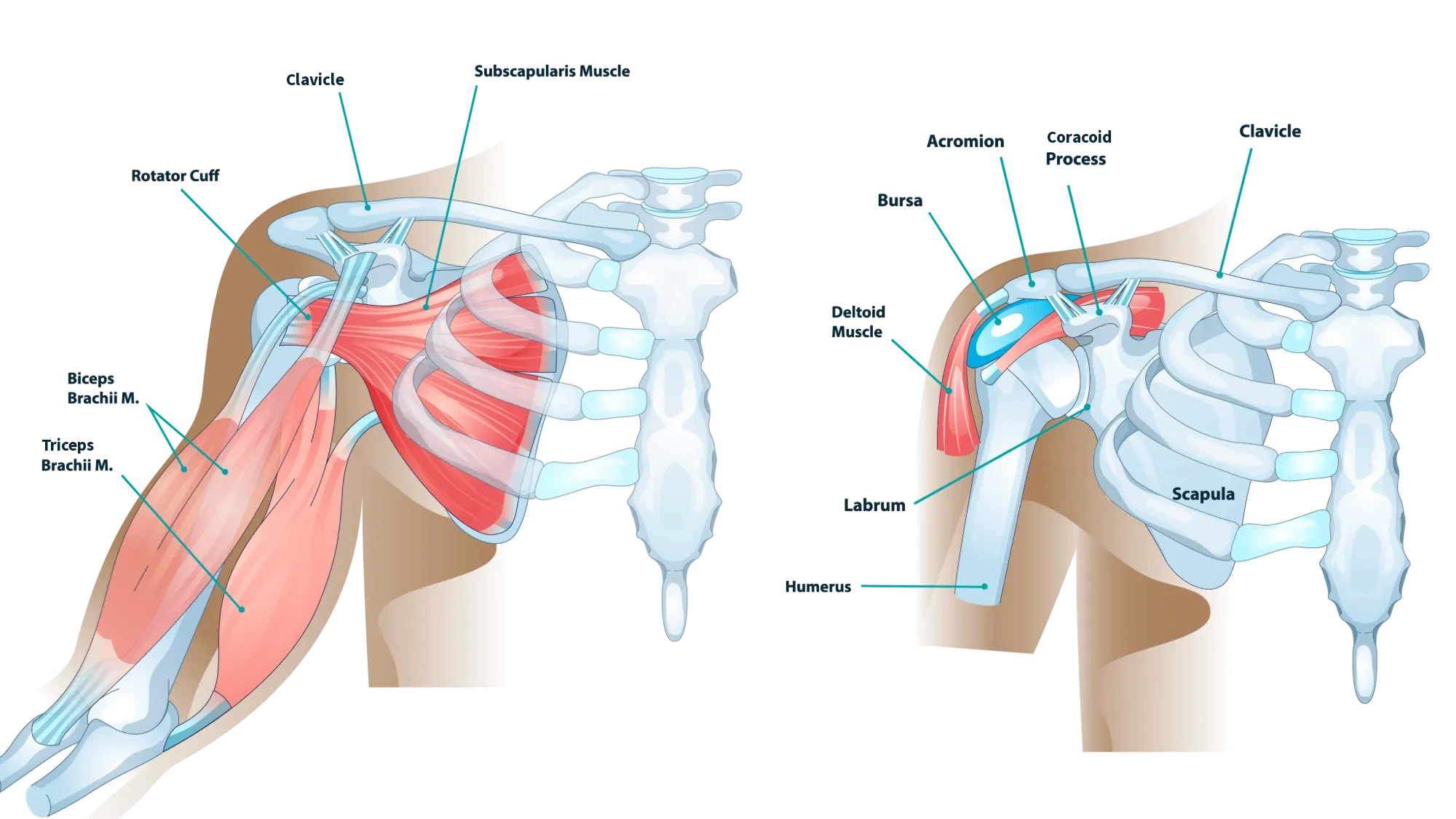
The shoulder is designed for range of motion, not necessarily for absorbing impact. When you fall, your instinct is to put your arm out to catch yourself. That reflex helps protect your head and spine, but it can transfer significant force into the shoulder joint. The structures that hold the shoulder together (tendons, ligaments, cartilage, and bone) can all be strained or torn under that kind of sudden load.
The ball-and-socket structure of the shoulder allows you to move your arm in nearly every direction. However, because the socket is relatively shallow, it depends heavily on surrounding soft tissue for stability. This is precisely what makes fall injuries so varied and sometimes deceptively complex.
Common Shoulder Injuries Caused by Falls
Falls can injure the shoulder in a number of ways. The type and extent of the injury often depend on factors like how you landed, how fast you were moving, your age, and the overall health of your shoulder tissue before the fall.
Rotator Cuff Tears
The rotator cuff is a group of four tendons that hold the arm bone securely in the socket while also allowing movement. A fall can tear one or more of these tendons, either partially or all the way through. Acute rotator cuff tears from a fall are more common in people over the age of 50, partly because tendon tissue tends to weaken and lose elasticity with age. Symptoms may include sharp pain at the time of the fall, weakness when trying to lift the arm, and difficulty performing everyday tasks like reaching into a cabinet or fastening a seatbelt. Some individuals describe a tearing sensation at the moment of impact, while others notice pain building gradually over the hours that follow.
Shoulder Dislocation and Labral Tears
When the force of a fall drives the ball of the humerus out of the socket, the result is a shoulder dislocation. This is one of the more immediately apparent injuries because the shoulder may look visibly out of place, and the pain is often severe. The labrum, a ring of cartilage that deepens the socket and helps hold the ball in place, may be torn at the same time. A labral tear may not show up clearly on a standard X-ray, which is one reason why imaging beyond plain X-rays may be recommended after a dislocation. Left untreated, a significant labral injury may lead to ongoing shoulder instability and repeated dislocations over time.
Fractures Around the Shoulder
Falls are one of the leading causes of shoulder fractures. Shoulder fractures may occur in the following bones:
- The proximal humerus (top of the upper arm bone)
- The clavicle (collarbone)
- The scapula (shoulder blade), though less commonly
Proximal humerus fractures are particularly common in older adults whose bone density may be reduced. A fracture is often confirmed with X-rays, though CT scans may be needed to assess the full extent of the break and guide treatment decisions. Some fractures can be managed without surgery, while others, especially those with multiple fragments or significant displacement, may require surgical fixation or even shoulder replacement.
AC Joint Injuries
The acromioclavicular joint, commonly called the AC joint, sits at the top of the shoulder where the collarbone meets the shoulder blade. A direct fall onto the tip of the shoulder can sprain or separate this joint. AC joint injuries range in severity from a mild stretch of the ligaments to a complete separation where the bones are visibly displaced. Mild injuries often respond well to conservative care, while more severe separations may require surgical reconstruction to restore stability and relieve pain.
Symptoms That Suggest Something Is Wrong
Not every sore shoulder after a fall signals a serious injury. Mild bruising and muscle soreness may resolve on their own within a few days. However, certain symptoms suggest that a more significant problem may be present and that a prompt evaluation is a good idea:
- Difficulty or inability to lift the arm away from your side
- Visible deformity, swelling, or bruising around the joint
- A sensation that the shoulder is loose, slipping, or out of place
- Numbness or tingling running down the arm
- Pain that is severe, worsening, or not improving after several days
It is worth noting that some injuries, particularly rotator cuff tears and labral damage, may initially feel less severe than they actually are. An evaluation by an experienced shoulder specialist can help identify the underlying cause and guide appropriate treatment.
How a Shoulder Specialist Evaluates a Fall Injury
A thorough evaluation typically begins with a detailed conversation about what happened. How did you land? Which direction did your arm go? Did you feel a pop, a tear, or sudden giving way? This history helps a specialist narrow down which structures were most likely placed under stress. A physical examination follows, during which the doctor assesses your range of motion, strength, and stability, and tests specific structures to identify the source of pain or weakness.
Imaging plays a role in the diagnostic process. X-rays can identify fractures and reveal signs of joint damage, but they do not show soft tissue structures like tendons, ligaments, or the labrum. For those injuries, an MRI may be recommended. Ultrasound is sometimes used to assess the rotator cuff dynamically. Depending on the findings, additional imaging such as a CT scan may be requested to evaluate bone detail more precisely.
Treatment Options: From Conservative Care to Surgery
Treatment is not one-size-fits-all. Many injuries respond well to non-surgical care, especially when they are diagnosed early and managed appropriately. Others require surgical intervention to restore stability, repair torn tissue, or address a fracture.
Non-surgical treatment may include a period of rest and immobilization, anti-inflammatory medications, physical therapy to restore range of motion and rebuild strength, and injections in certain cases. This approach tends to work well for milder rotator cuff injuries, minor AC joint separations, and certain fractures that are minimally displaced.
When surgery is the right path forward, options may include arthroscopic rotator cuff repair, Bankart repair or labral reconstruction for instability, AC joint reconstruction, surgical fixation of fractures, or, in cases where joint damage is severe, shoulder replacement. I prioritize minimally invasive arthroscopic techniques whenever appropriate.
Summary
Understanding your shoulder injury from a fall is not always straightforward. The shoulder is a complex joint, and falls can injure it in multiple ways, sometimes at the same time. Whether you’ve torn a tendon, fractured a bone, injured the labrum, or separated the AC joint, an accurate diagnosis is an important step in developing an effective treatment plan. Symptoms that linger, worsen, or limit your ability to use your arm may be a signal that professional evaluation is the right next step.
Frequently Asked Questions
How do I know if my shoulder injury from a fall is serious?
Signs that may suggest a more serious injury include the inability to lift your arm, visible deformity or significant swelling, a feeling of looseness or instability, numbness running down the arm, or pain that is severe and not improving within a few days. When in doubt, evaluation is a safe approach.
Will I need surgery after a fall that injured my shoulder?
Not necessarily. Many shoulder injuries respond well to non-surgical treatment, including rest, physical therapy, and injections. Surgery may be considered when the injury is severe, involves a complete tear or unstable fracture, or when conservative care has not produced adequate improvement. The decision depends on the specific injury, your overall health, and your activity goals.
What imaging will I likely need for a shoulder injury from a fall?
X-rays are usually the first step and can identify fractures and signs of dislocation. If a soft tissue injury is suspected, such as a rotator cuff tear or labral damage, an MRI may be recommended. A CT scan may be used to get a more detailed look at bone fragments or complex fractures. The appropriate imaging depends on your symptoms and what the physical examination reveals.
